Source Vertical Anti Clamp Laser Sensor for Detection, Industry, and Automation
Find 30 verified vertical anti clamp laser sensor options for industrial detection, automation lines, and safety systems. Compare models like CNB-220L and SMART SPOT with varying ranges and IP ratings to select the right optical switch for your needs; compare the available evidence and request quotations based on your requirements.
Key considerations
Products List




Comprehensive Sourcing Guide
Vertical Anti Clamp Laser Sensor Sourcing Guide
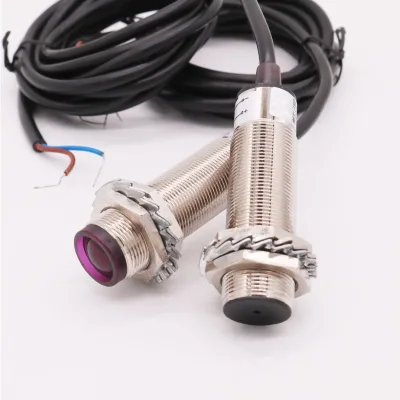
Procuring vertical anti-clamp laser sensors requires careful attention to the specific optical configurations available in the current market. Buyers should verify that the selected unit utilizes Vcsel light sources, which are observed in listings as providing reliable detection for industrial applications. The physical form factor often varies, with some models featuring plastic housings while others utilize metal construction to withstand harsh environments.
When evaluating potential suppliers, it is essential to confirm the customization capabilities offered for specific mounting needs. The observed product range includes models with individual packaging as well as those shipped in cartons, indicating flexibility in logistics. Buyers must ensure the sensor's IP rating aligns with the intended environment, as observed data suggests variations between plastic and metal material ratings that affect durability.
Product Scope and Observed Listing Signals
The market for vertical anti-clamp sensors displays a wide range of model numbers, including CNB-220L, SMART SPOT, and LS90, each serving distinct detection requirements. Some listings highlight specific features like 2D laser scanning or semi-conductor technology, which are critical for high-precision tasks. The observed range of detection distances spans from 10 meters to 50 meters, requiring buyers to match the sensor's range to their specific operational geometry.
Packaging and physical dimensions are also key signals for product identification, with standard sizes ranging from 674535mm to 11010555mm. Buyers should note that the output signal type is typically switching, which simplifies integration into existing control systems. The presence of wire contact mounting types suggests a direct connection method that may influence the wiring harness design in the final assembly.
Technical Specifications to Verify
Technical verification must begin with the light source and beam configuration, as the distinction between laser beams and trough beams dictates the sensor's application suitability. Buyers should confirm whether the device operates as a through-beam or utilizes a specific laser curtain technology for safety or detection purposes. The accuracy of 1cm observed in certain models serves as a benchmark for precision requirements in automated assembly lines.
Further scrutiny is needed regarding the physical output and signal processing capabilities of the unit. The observed production process of integration suggests a compact design, but buyers must verify the cable length, which can be up to 3 meters in some configurations. Additionally, the aspect ratio of 1:4 and the specific weight of 100g are critical for mounting constraints and space allocation within tight machinery enclosures.
Compliance and Safety Documentation
Safety compliance is paramount when selecting laser sensors, particularly those operating with Class 1 eye safety standards under IEC60825. Buyers must request documentation proving that the specific model meets these international safety classifications to ensure operator protection during routine maintenance and operation. The presence of CE certification in observed listings indicates adherence to European safety directives, which is often a prerequisite for global supply chains.
Beyond safety, the standardization of the product is essential for regulatory acceptance in various markets. While some listings mention black colors as a standard, the physical dimensions and material standards must be explicitly verified against local industrial regulations. Buyers should ensure that the manufacturer provides clear evidence of the production process integration, which often correlates with consistent quality and safety performance over the product's lifecycle.
Cost Drivers and Commercial Terms
The pricing structure for these sensors is influenced heavily by the customization options and the specific model number selected. The observed price range is vast, extending from low-cost units to high-value specialized sensors, reflecting the complexity of the internal integration and the light source technology used. Buyers should anticipate that models with advanced features like 2D laser scanning or specific IP ratings will command a premium over standard optical switches.
Commercial terms such as the minimum order quantity (MOQ) and lead times are critical factors in the procurement decision. The observed MOQ range of 1 to 5 units suggests flexibility for small-batch testing, but larger orders may require different negotiation strategies. Buyers must clarify the production date code, as observed data indicates recent manufacturing dates like 2025, which can impact inventory management and warranty periods.
Supplier Qualification and Quality Control
Supplier qualification should focus on the origin of the product, with Guangdong, China being a primary hub for these optical sensors. Buyers must verify that the supplier has a robust production process that ensures the integration of components like conductors and semi-conductors without compromising the sensor's reliability. The brand name "senmatrix" appears in listings, but buyers should not rely on a single brand and must evaluate the supplier's overall track record.
Quality control measures must include verification of the product's theoretical basis, such as laser photoelectric or laser sensor principles, to ensure the technology is sound. Buyers should request test results that confirm the sensor's ability to detect objects with long distances and high accuracy. The use of industry-specific applications as a reference point helps validate that the supplier understands the specific demands of the vertical anti-clamp environment.
Long-Term Procurement Checks
Long-term procurement success depends on the availability of spare parts and the consistency of the manufacturing process over time. Buyers should establish a relationship with suppliers who can guarantee the continuity of specific model numbers like TCS401 or 0301, ensuring that replacement units match the original specifications exactly. The 8-bit file type mentioned in some contexts may relate to data processing capabilities that need to remain compatible with future system upgrades.
Finally, buyers must monitor the evolution of the product's features, such as the transition from standard photoelectric sensors to micro laser photoelectric sensors. Regular audits of the supplier's quality control and adherence to standards like ISO 9001, even if not explicitly confirmed in every listing, are necessary to maintain high standards. Continuous verification of the output signal type and mounting type ensures that the sensor remains a reliable component in the production line for years to come.
FAQs
What customization options are available for vertical anti clamp laser sensors?
Customization is available for these vertical anti clamp laser sensors to meet specific needs. The products support customized configurations and feature integration production processes. Buyers can request tailored solutions while maintaining standard safety classifications like Class 1 eye safety for operational reliability.
Which certifications do these vertical anti clamp laser sensors hold?
These vertical anti clamp laser sensors hold CE certification for compliance with safety standards. The products also adhere to IEC60825 Class 1 eye safety regulations. This ensures that the sensors meet international requirements for industrial use and optical safety in various manufacturing environments.
How does the range of vertical anti clamp laser sensors vary?
The range of vertical anti clamp laser sensors varies between 10 meters and 50 meters depending on the specific model. Some units offer a 10-meter detection distance while others extend up to 50 meters. This flexibility allows selection based on the required detection distance for different industrial applications.
Can vertical anti clamp laser sensors be used in outdoor environments?
Vertical anti clamp laser sensors are available with IP ratings suitable for various environments. Some models feature plastic housing while others use metal construction for durability. The specific IP rating depends on the material and production process, ensuring protection against dust and moisture for reliable operation.
What is the typical weight of a vertical anti clamp laser sensor?
The typical weight of a vertical anti clamp laser sensor is approximately 100 grams. This lightweight design facilitates easy installation and mounting in tight spaces. The compact form factor combined with individual or carton packaging ensures safe transport and handling during logistics operations.
Which light source technology is used in vertical anti clamp laser sensors?
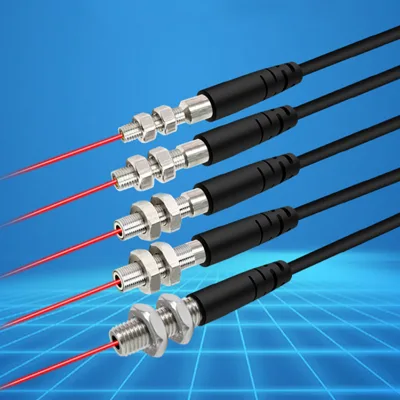
Vertical anti clamp laser sensors utilize Vcsel light source technology for precise detection. These sensors emit laser beams and can function as trough beams or laser curtains. The semiconductor features ensure high accuracy and long detection distances for demanding industrial sensing tasks.
What is the accuracy of vertical anti clamp laser sensors?
The accuracy of vertical anti clamp laser sensors is specified as 1 centimeter. This precision is achieved through advanced laser photoelectric theory and integration production processes. Such accuracy supports reliable detection in applications requiring exact positioning and measurement within industrial settings.